Nova Scola: Reimagining Education for the 21st Century
Education in the 21st century is undergoing one of its most profound transformations in history. As global challenges grow increasingly complex — from climate change and digital disruption to social inequality and rapid technological growth — the limits of traditional schooling systems have become more apparent. In response, innovative educational philosophies have emerged to redefine what learning can and should be. One such groundbreaking idea is Nova Scola — literally meaning “new school” — an educational model and movement that seeks to reinvent how we learn, teach, and think about education itself.
What Is Nova Scola?
At its core, Nova Scola is more than a name — it’s a philosophy of education that rejects outdated industrial models of schooling and embraces a holistic, student-centered, and real-world approach to learning. Unlike traditional systems that emphasize rote memorization and standardized testing, Nov Scola focuses on:
- Critical thinking
- Creativity
- Emotional intelligence
- Personalized learning
- Real-world problem solving
Noa Scola is rooted in the belief that students should be active participants in their education — not passive recipients of information — and that learning must be relevant to both personal development and societal needs.
Historical Context: Why Nova Scola Emerged
To appreciate Nov Scola, it’s important to understand the historical context that led to its rise. For centuries, education systems around the world have followed a model developed during the Industrial Revolution — a system designed to produce predictable outcomes through standardized curricula, rigid schedules, and hierarchical classroom structures.
However, the world of the 21st century demands different skills and mindsets:
- Critical and adaptive thinking
- Collaboration across cultures
- Creative problem solving
- Social and emotional learning
- Technological fluency
Many educational thinkers have long pointed out the limitations of traditional schooling. Visionaries like Maria Montessori, John Dewey, and Paulo Freire championed learner autonomy, experiential learning, and education connected to real life — all foundational influences for Nva Scola.
As global disruptions like the COVID-19 pandemic exposed gaps in conventional schooling — particularly around flexibility, technology integration, and relevance — the need for new models became even more urgent. Nova Scola emerged in this context: not merely as an idea but as a practical framework for education that matches the needs of today’s world.
The Meaning Behind the Name
The phrase “Nova Scola” combines two Latin words:
- Nova — meaning new
- Scola (or schola) — meaning school
Thus, the term conveys not just a new school in a literal sense, but a new way of schooling — one that breaks away from convention and creates education that is adaptive, responsive, and aligned with modern life.
Interestingly, due to language similarities across Latin-derived languages such as Portuguese and Spanish, the term “Nova Scola” appears in many contexts online — sometimes referring to different institutions, platforms, or schools that adopt this name. But despite this variation, the underlying idea remains the same: an innovative and meaningful approach to learning.
Core Principles of Nova Scola
At the heart of Nova Scola are several foundational principles that define its philosophy and guide its implementation:
1. Learner-Centered Education
Nova Scola places students at the center of the learning process. Instead of rigid curricula imposed from above, learners are encouraged to explore topics that interest them, ask questions, set goals, and drive their own educational journeys. Teachers act as facilitators and mentors rather than authoritarian instructors.
2. Interdisciplinary and Project-Based Learning
Instead of teaching subjects in isolation (math separate from science, history separate from art), Nova Scola integrates learning across disciplines. Projects and modules often tie together multiple subjects around real-world themes such as sustainability, social justice, or technology. This mirrors how knowledge is applied outside the classroom and helps students develop flexible thinking.
3. Real-World Relevance
Nova Scola connects education to life beyond school. Learning is rooted in real problems, community projects, apprenticeships, and hands-on activities. Whether designing prototypes, engaging in service learning, or collaborating with local organizations, students see how their studies make a difference in the world.
4. Student Agency and Autonomy
Unlike traditional schools where students follow fixed timetables and standardized tests, Nova Scola encourages learners to set their own pace, choose learning pathways, and take ownership of their education. This fosters self-motivation, curiosity, and a sense of responsibility.
5. Equity and Inclusion
Nova Scola aspires to make education meaningful and accessible for all students, regardless of background or ability. Differentiated supports, inclusive environments, and culturally responsive teaching help ensure every learner can thrive.
6. Emotional and Social Learning
Beyond academic skills, Nova Scola places strong emphasis on emotional intelligence — including empathy, self-regulation, communication, and interpersonal skills. Learning is about personal growth as much as intellectual achievement.
7. Flexible and Adaptive Curriculum
Rather than rigid syllabi fixed for the school year, Nova Scola’s curriculum adapts to emerging global trends, student interests, and community needs. Flexibility allows education to remain relevant and responsive.
How Nova Scola Works in Practice
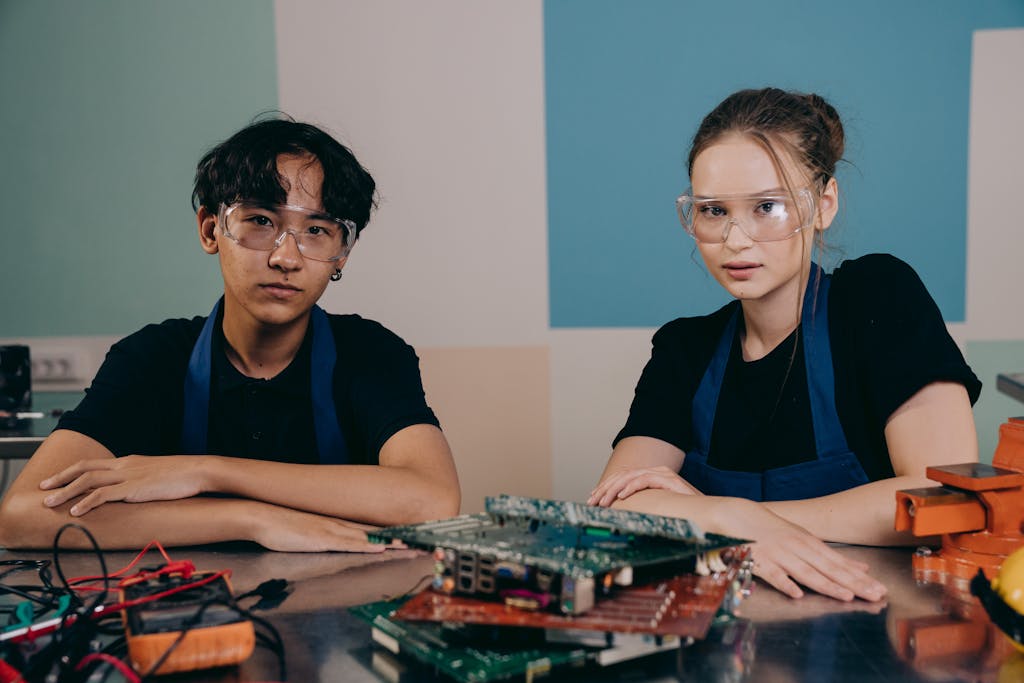
A typical day or program at a Nova Scola-inspired school looks very different from a traditional classroom. Rather than rows of desks and lecture-style teaching, learning spaces resemble innovation labs, project studios, and collaborative workshops.
The Learning Experience
- Morning Sessions might begin with mindfulness activities, discussions, or journaling to center students.
- Theme-Based Projects replace standard lessons. For example, a project on water scarcity could include measurements in math, historical case studies, and ethical debates.
- Community Engagement — Students might partner with local NGOs, businesses, or experts to connect school learning with community needs.
- Digital Reflection — Learners document progress through journals, portfolios, or digital platforms that track growth rather than just test scores.
Assessment and Evaluation
Instead of standardized examinations, Nova Scola uses authentic assessments such as:
- Portfolios
- Project exhibitions
- Peer reviews
- Growth reports
These forms of evaluation capture not just what students know, but what they can do, how they think, and how they apply knowledge in meaningful ways.
Nova Scola Compared to Traditional Schooling
The differences between Nova Scola and conventional education are stark:
| Feature | Traditional Schooling | Nova Scola |
| Curriculum | Fixed, subject-based | Flexible, interdisciplinary |
| Assessment | Standardized tests | Portfolios, exhibitions |
| Teacher Role | Instructor | Facilitator/Mentor |
| Student Role | Passive learner | Active co-creator |
| Focus | Memorization | Real-world application |
| Skills Emphasis | Academic only | Academic + social + emotional |
Benefits of Nova Scola
1. Improved Engagement and Motivation
When students are empowered to follow their interests and learn by doing, engagement naturally increases. Projects that feel meaningful to learners lead to deeper understanding and long-lasting knowledge.
2. Preparation for Real Life
By blending academic skills with practical problem solving, Nova Scola prepares students for real contexts — in careers, community roles, and civic life.
3. Development of Soft Skills
Communication, collaboration, resilience, and empathy become integral parts of education — not optional extras.
4. Personalized Growth
The model supports individual strengths, pacing, and learning pathways, reducing stress and boosting confidence.
5. Community Integration
Learning extends beyond the classroom into real environments, strengthening civic responsibility and community ties.
Challenges and Critiques
Despite its many benefits, Nova Scola also faces challenges:
1. Implementation Complexity
Transitioning from traditional systems requires substantial redesign of curriculum, teacher training, and assessment models.
2. Resource Needs
Project-based learning, technology tools, and community partnerships demand time, funding, and infrastructure — which may be limited in some regions.
3. Scaling
While pilot programs thrive, expanding Nova Scola across national or large public systems requires policy change, cultural shift, and sustained investment.
Global Implementation Examples
Nova Scola principles have been adapted differently around the world, showing its versatility:
- Some schools emphasize sustainability education and climate action integration.
- Others adopt technology-enhanced learning with responsible AI tools.
- Community collaborations with NGOs, universities, and industry partners bring real-world opportunities to students.
The Future of Nova Scola
Looking ahead, Nova Scola continues to evolve. Potential future developments include:
- Climate-resilient campuses
- Global learning hubs and exchanges
- Neurodiversity-inclusive environments
- Decolonized and culturally responsive curricula
- AI-supported mentorship and personalization
As education becomes more interconnected with global challenges, Nova Scola’s focus on adaptability, purpose, and holistic development positions it as a promising model for the future.
Conclusion: Why Nova Scola Matters Now
In an age where change is constant, the old rules of schooling no longer suffice. Nova Scola offers a bold vision — not just a better school, but a better way to foster human growth, purpose, and adaptability. By prioritizing critical thinking, real engagement, and personal development, Nova Scola opens doors to learning that is meaningful, relevant, and transformative.
Education should not be about preparing students for tests. It should prepare them for life. Nova Scola — true to its name — is a new school for new times.